The board as a journey
The board begins with Cell 1 · Janmabhumi, the place of birth. The player then enters Cell 2 · Karmabhumi, the field of action.
From there the journey passes through homes, cities, pilgrimage centres, forests, mountains, sacred places and different planes of existence.
Eventually the geography of India gives way to a geography of the cosmos: Yamapuri, Sattalok, Kailash, Varunlok, Dhruvalok, Brahmalok, Nakshatralok, Chandralok, Suryalok and Indralok.
Above them lie the three final realms used in this digital reconstruction: 62 · Shivlok, 63 · Vaikunthalok and 64 · Golok.
“What begins as human geography gradually becomes sacred geography, and sacred geography ultimately becomes cosmology.”
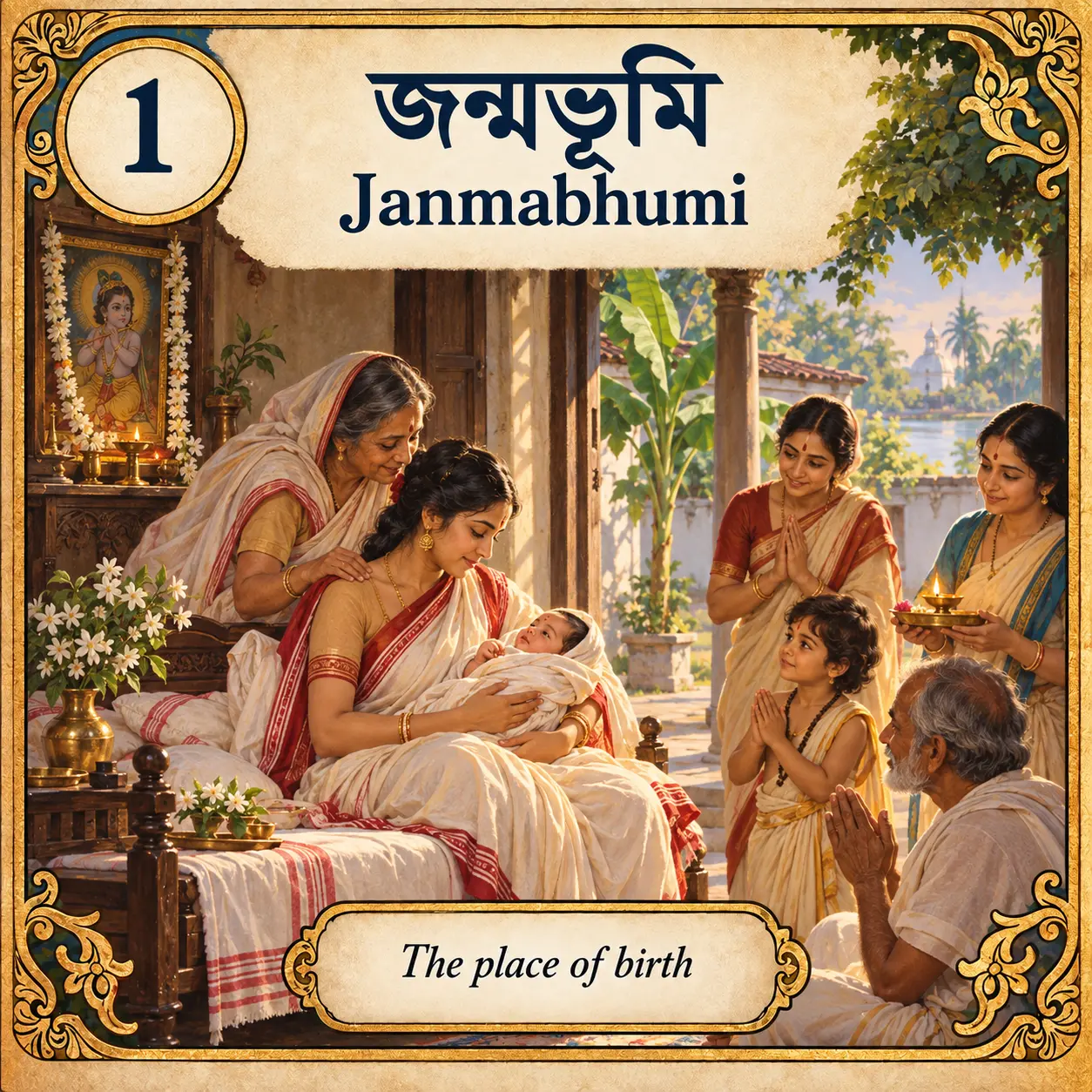
Stage 1
Birth
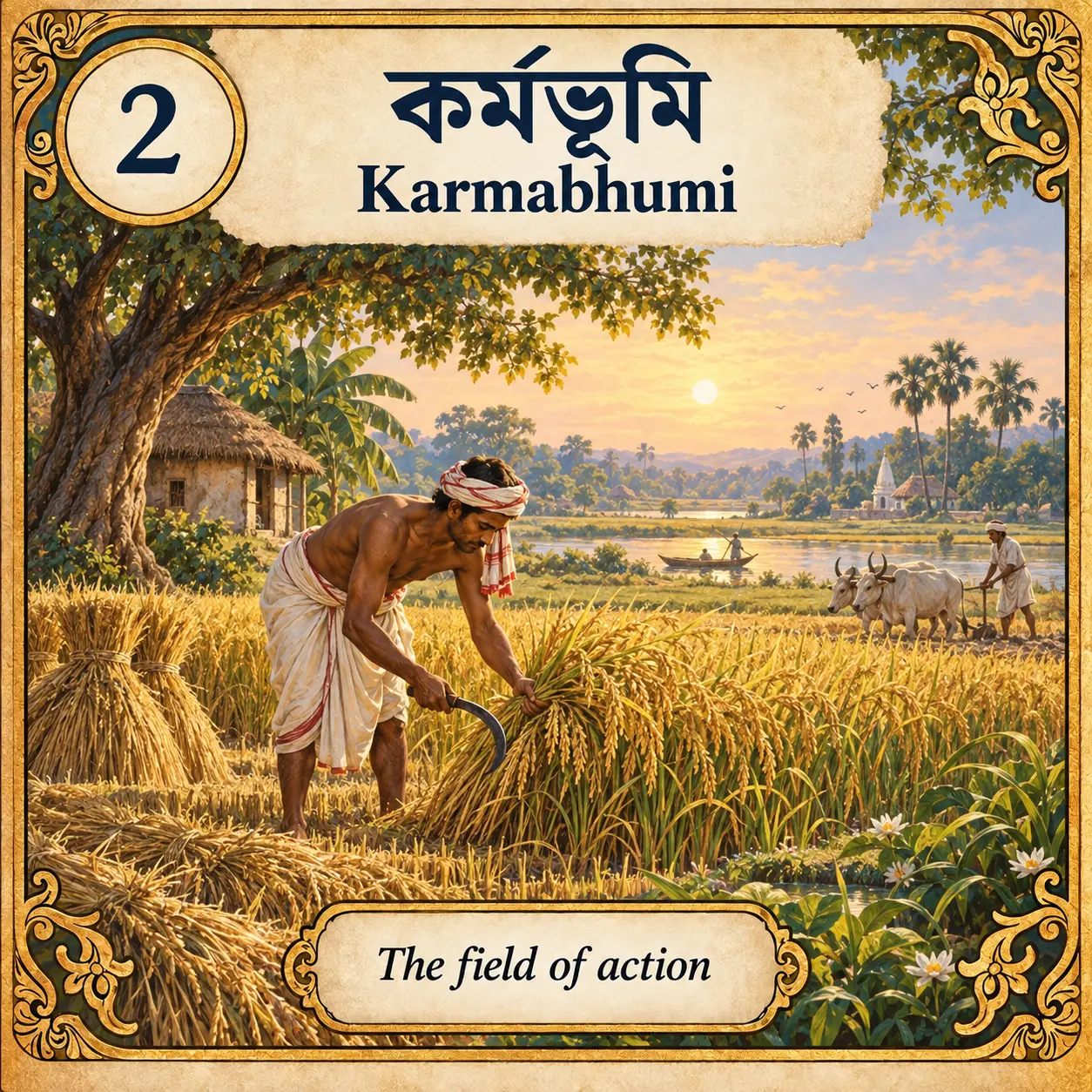
Stage 2
Earthly life
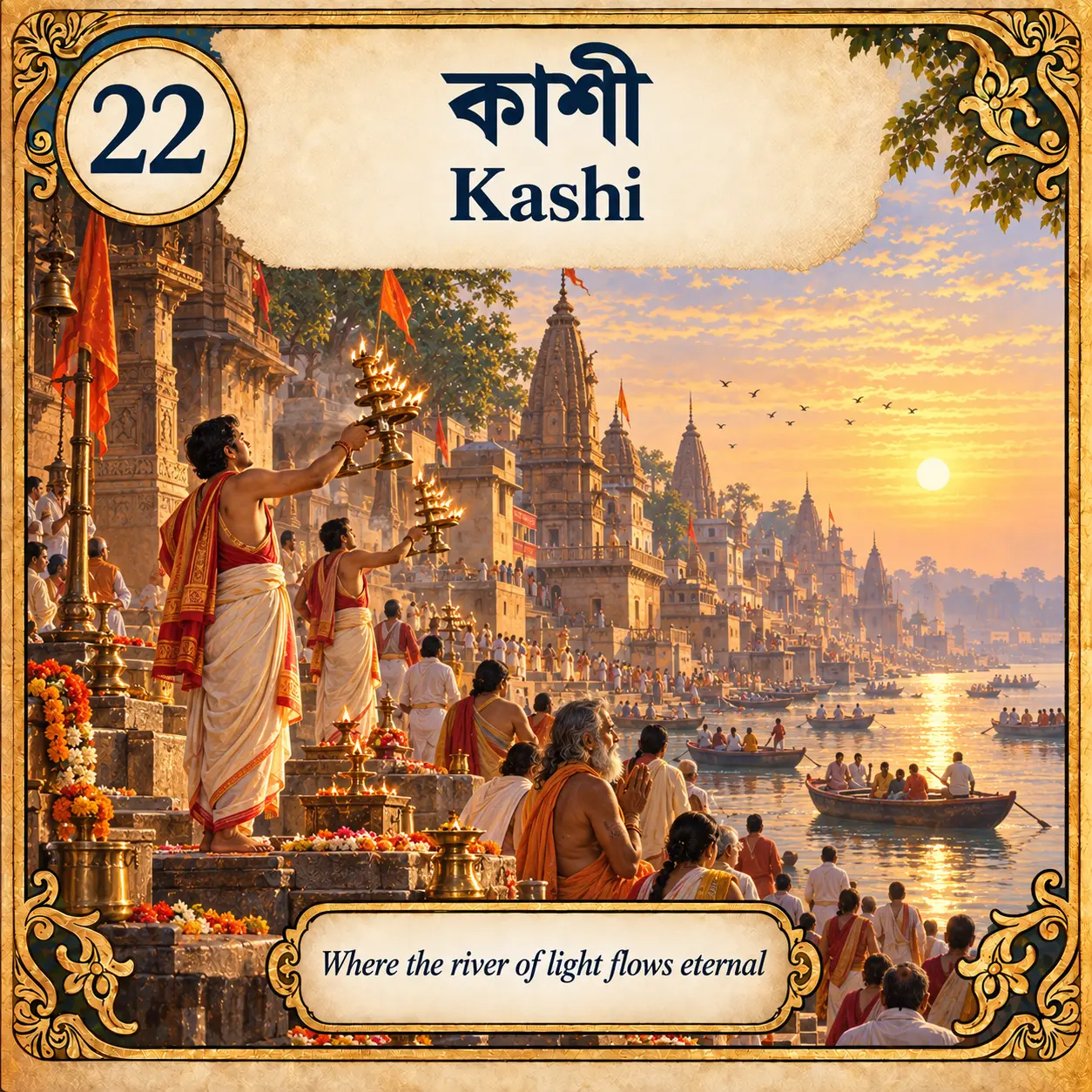
Stage 3
Pilgrimage
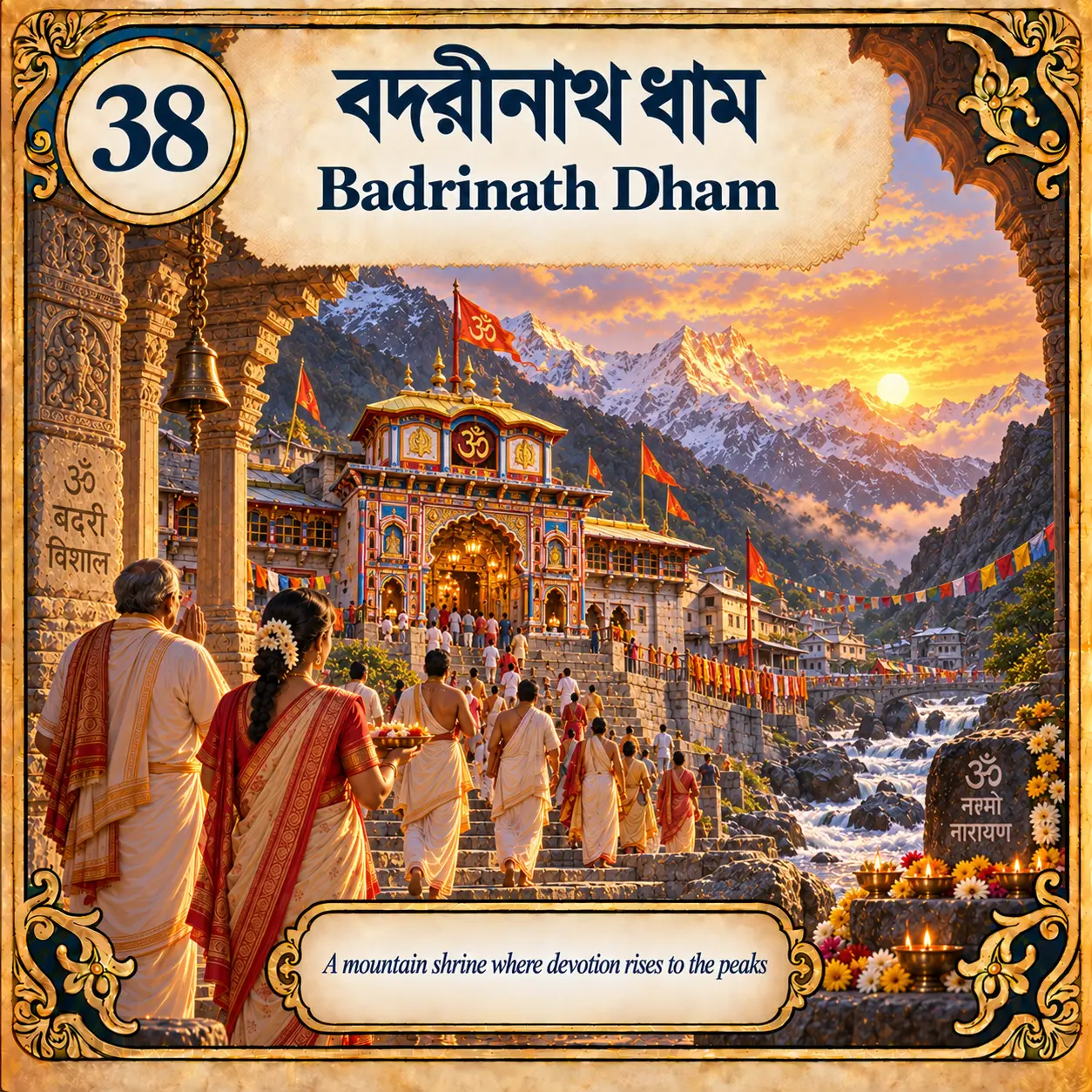
Stage 4
Sacred geography
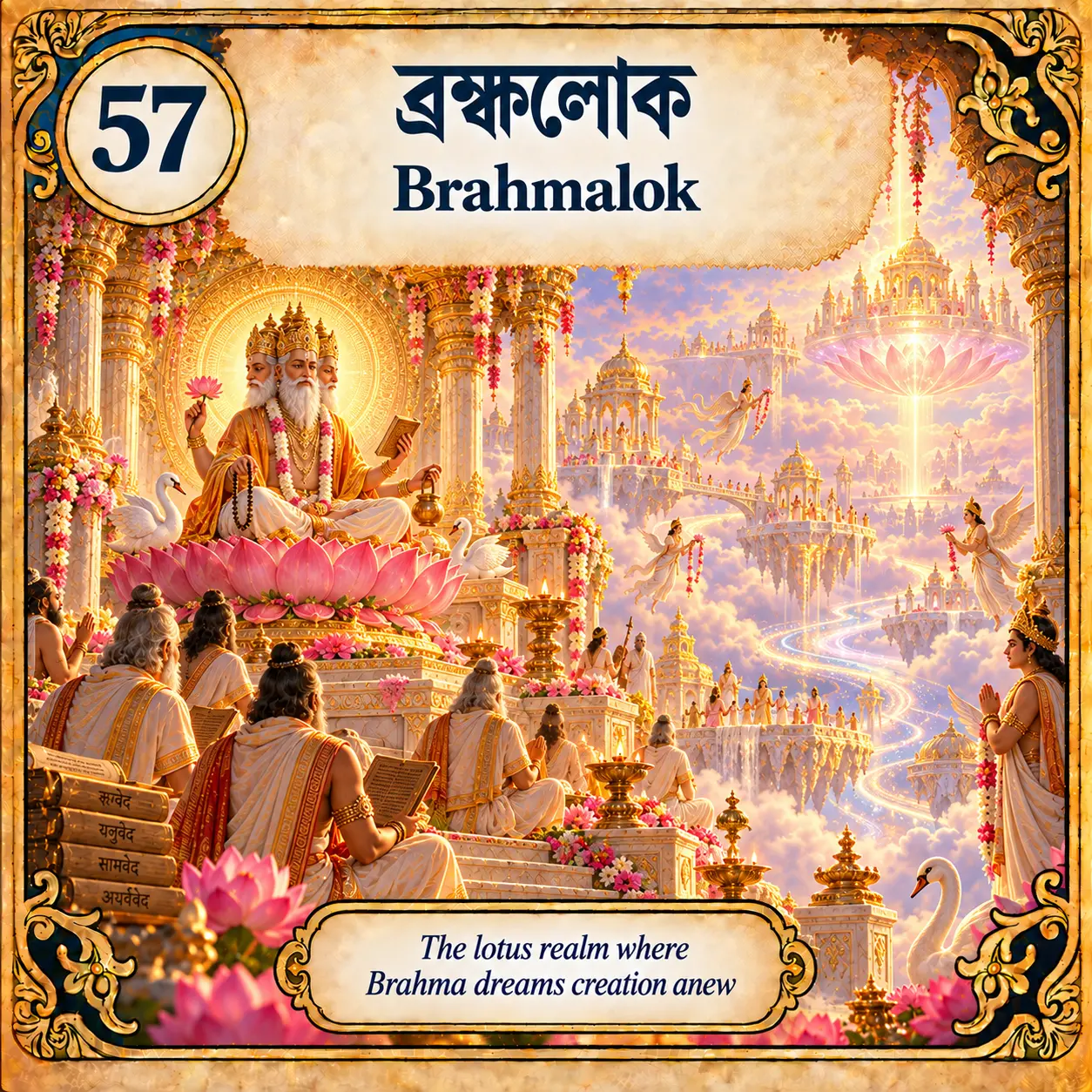
Stage 5
Celestial realms
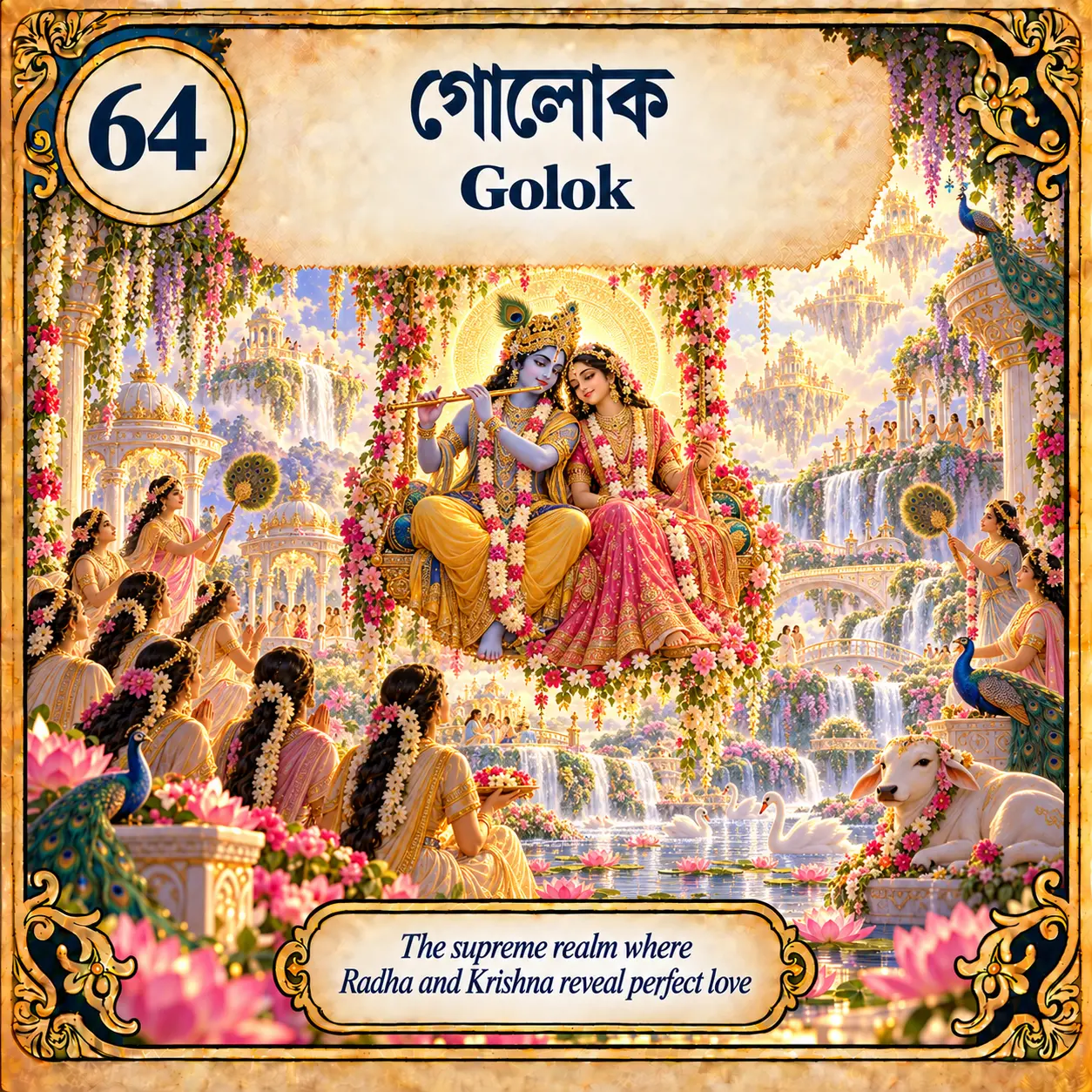
Stage 6
Golok
The idea behind the game
Golokdham is not simply about reaching Cell 64 before somebody else. Its deeper mechanism is uncertainty.
Most throws produce ordinary movement. But particular combinations of place + cowrie throw open another route. Some routes propel the player upwards. Some send the player backwards. Some cells transport the player immediately simply by being reached.
Therefore a player apparently far ahead may return almost to the beginning. Another player much further behind may suddenly approach Golok.
A board of samsara
Golokdham can be read as a miniature representation of samsara, the changing world of experience.
Birth leads to action. Action leads to journeys. Journeys lead to encounters, sacred places, reversals, ascents and falls.
Even reaching an elevated position does not necessarily mean that the journey is complete.
Chance, place and consequence
The cowries introduce chance. But the player is not travelling through an empty numerical track. The meaning of a throw depends upon where the player presently stands.
“Not only: What did you throw? But: Where are you when the throw arrives?”
Why revive Golokdham?
Preserve
A distinctive Bengali board-game tradition survives only through a small number of boards, references, memories and scholarly records.
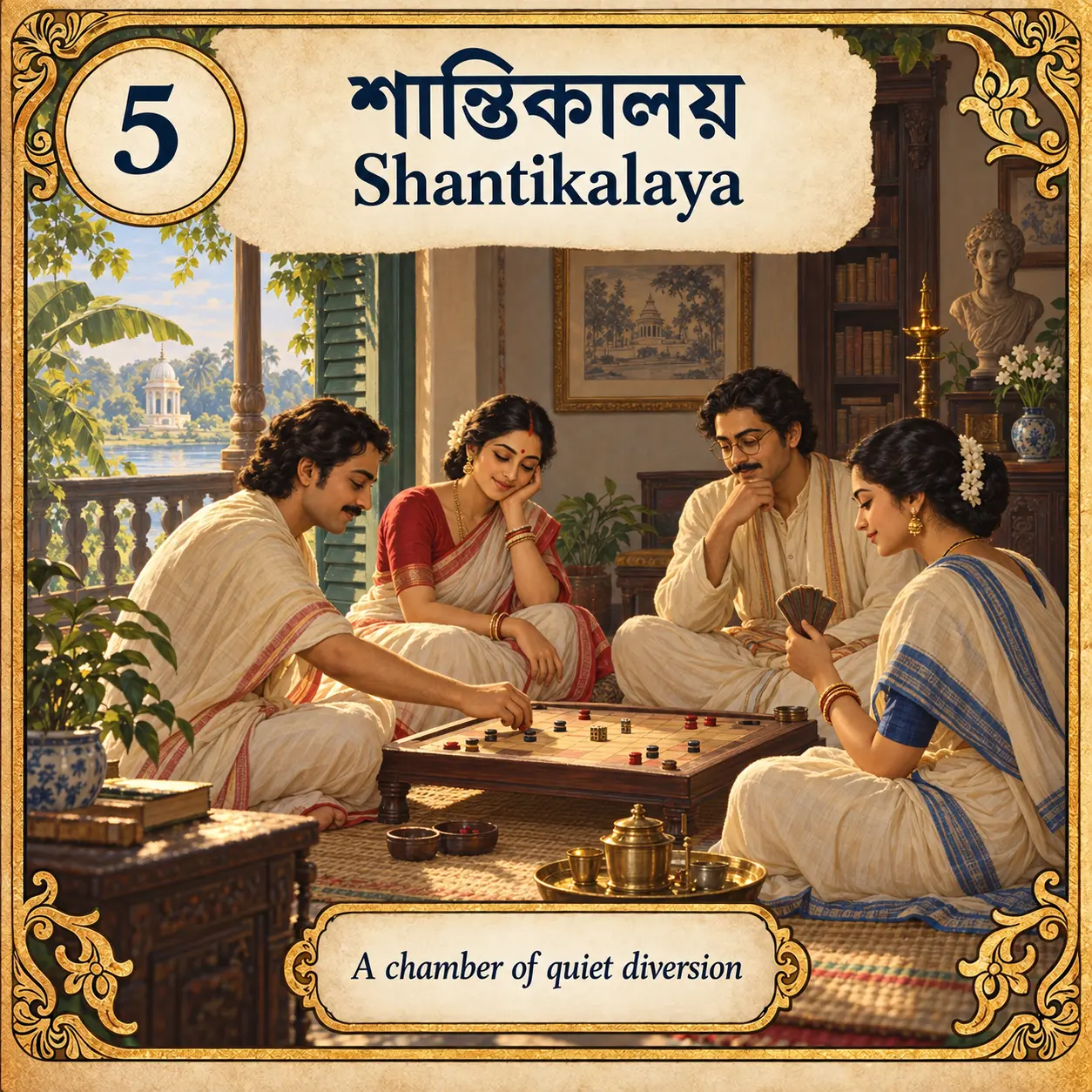
Make playable again
A historical object becomes easier to understand when its movements, reversals and unexpected connections can actually be experienced.
Recover its contemplative character
Golokdham can be enjoyed simply as a game. But its structure also invites reflection on movement, consequence, uncertainty, pride, setback and the meaning of the Goal.
From the reconstructor
Reconstructor’s Note
I’m Avirup Chakraborty, a consumer insights and research professional with a deep personal interest in Vedanta, the Ramakrishna-Vivekananda tradition, and the ways in which older spiritual ideas can be rediscovered through contemporary formats.
The idea of reconstructing Golokdham began when I came across references in the Sri Sri Ramakrishna Kathamrita to Sri Ramakrishna watching his disciples play this remarkable game. What started as curiosity about a nearly forgotten board gradually became an attempt to reconstruct its places, rules, symbolism, and spiritual journey, while making it accessible again in a form that can be explored and played today.
I have not authored Golokdham. What I have tried to do is research it, reconstruct it, and set it down again in a form that can be played — with the provisional readings and editorial choices recorded in the note below.
Editorial note
About this reconstruction
This digital Golokdham is a historically informed reconstruction, not a claim to reproduce every known Golokdham edition.
The surviving tradition includes multiple printed forms and differences in rules and terminology. For this edition, individual cell names and movement instructions have been transcribed from a recovered Bengali Golokdham board and cross-checked wherever possible against historical research.
- Cell 3
- The domestic illustration and movement rule are known, but its historical title remains provisional.
- Cell 49
- The label “Pitrulok / Pretlok” is retained pending definitive reading of the original printed title.
- Cell 40
- The printed instruction names Vrindavan as its destination, although a faint bracketed number conflicts with the confirmed board numbering. This edition follows the named destination: 40 → 34 Vrindavan.
- Cells 62–64
- Shivlok, Vaikunthalok and Golok are the labels chosen for conceptual clarity in this digital reconstruction.
Illustrations. The miniature drawings are modern heritage-style interpretations inspired by the surviving board and its subjects. They are not exact facsimiles of the nineteenth-century artwork.